
1. Home
  2. Guides
Glasgow City Council process

Dropped kerb permission in Glasgow

A dropped kerb in Glasgow requires a vehicle crossing consent from Glasgow City Council's roads service, applied for by the property owner or an authorised contractor, assessed against road safety and footway criteria, and constructed to the council's specification.

Dropped kerb permission

Last reviewed 8 August 2026

James Kirkland, Planning & Dropped Kerb Lead

Written by James Kirkland, Planning & Dropped Kerb Lead

What is a dropped kerb?

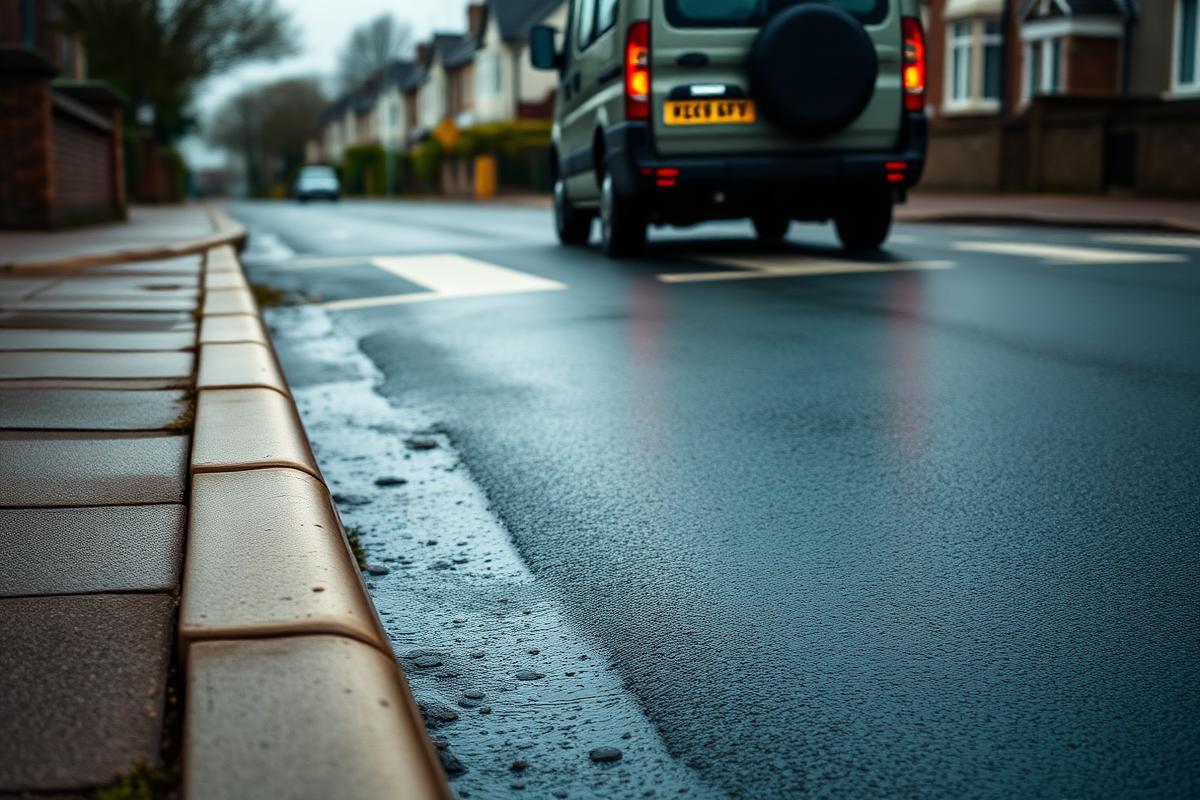
A dropped kerb is a lowered section of kerb and strengthened footway that allows a vehicle to cross the pavement legally between the road and a driveway.

The footway is public land. Driving over an unaltered kerb, or laying your own crossing without consent, is an offence and can result in reinstatement charges. The crossing must also be built to withstand vehicle loading, which is why the council specifies the construction.

Who can apply for a dropped kerb in Glasgow?

The property owner applies, or authorises a contractor to apply on their behalf.

  • Owner-occupiers apply directly
  • Landlords apply for tenanted property; tenants need written owner consent
  • Flat owners usually need agreement from other owners where the ground is shared
  • We handle the application and liaison with roads services as part of our driveway works

What does the council assess?

The council assesses road safety, visibility, footway condition and the depth of the parking space behind the crossing.

  • Adequate off-street depth so a parked vehicle does not overhang the footway
  • Visibility in both directions and distance from junctions, crossings and bends
  • Proximity to street furniture, lighting columns, trees, gullies and utility covers
  • Whether the road is classified, and whether traffic management is needed during construction
  • Loss of on-street parking, bus stops or waiting restrictions
  • Conservation area or listed building considerations affecting materials

What is the step-by-step application process?

  1. 1. Pre-check the location

    [1]

    Measure the depth from the back of the footway to the building line and photograph the frontage. Most refusals come from insufficient parking depth.

  2. 2. Submit the application

    [2]

    Apply to Glasgow City Council's roads service with a location plan, property details and the proposed crossing width.

  3. 3. Pay the assessment fee

    [3]

    The council charges for assessment and, separately, for the works or inspection. Confirm current fees on the council's own page before budgeting.

  4. 4. Site inspection

    [4]

    A roads officer inspects the location and checks utilities, drainage and sightlines.

  5. 5. Decision

    [5]

    Consent is granted, granted with conditions such as a reduced width, or refused with reasons.

  6. 6. Construction

    [6]

    The crossing is built to council specification, either by the council or by an approved contractor under permit, including utility protection where required.

  7. 7. Inspection and sign-off

    [7]

    The completed crossing is inspected. Any defect within the guarantee period is corrected before sign-off.

Fees, timescales and application routes are set by Glasgow City Council and change. Verify the current process and charges on the council's own guidance before applying.

How long does a dropped kerb take in Glasgow?

Allow several weeks between application and construction, driven by the council's assessment queue rather than the build itself.

Construction of a standard domestic crossing typically takes one to two days on site. Utility diversions, traffic management on busier streets, or a required tree assessment extend the programme considerably.

Why are dropped kerb applications refused?

Insufficient parking depth is the most common reason for refusal in Glasgow.

  • The driveway is too shallow, so a car would overhang the footway
  • Sightlines are obstructed or the crossing is too close to a junction
  • A lighting column, tree, gully or utility chamber sits in the crossing line
  • The proposal would remove a bus stop, loading bay or controlled parking space
  • The road is classified and the access would create a safety risk

A refusal is not always final. Reducing the crossing width, repositioning it along the frontage or increasing the driveway depth can make a resubmission viable.

Frequently asked questions

Everything you need to know

Yes. Every vehicle crossing over a public footway in Glasgow requires consent from Glasgow City Council's roads service, whatever surface the driveway uses.

Get a fixed-price driveway quote for your Glasgow property

Send your measurements, or ask us to measure on site. We quote by material, sub-base build-up and drainage solution, so you can compare like with like.